Research Labs
Location-Based Lead Attribution: Why Most Brands Get It Wrong (and How to Fix It)
The issue isn't broken tracking. It's that the data needed to answer location-level questions lives in systems that were never designed to talk to each other.

Most brands cannot attribute leads to specific locations because their data is fragmented across ad platforms, CRMs, POS systems, and call trackers that were never designed to share information. Solving location-based lead attribution requires standardized location IDs, a unified data layer, deliberate offline signal capture, and geo-level testing instead of user-level tracking.
What Is Location-Based Lead Attribution?
Location-based lead attribution is the process of tying a marketing lead, conversion, or sale back to the specific physical location (store, branch, or franchise) that generated it. For multi-location brands, this allows performance teams to measure ad spend effectiveness, foot traffic, and ROI at the store level rather than only at the campaign or channel level.
Unlike standard marketing attribution, which typically answers questions about which channel or campaign drove a conversion, location-based attribution adds a second dimension: it identifies which physical location benefited from that conversion. For franchise networks, retail chains, healthcare groups, automotive dealerships, fitness brands, and quick-service restaurants, this distinction is the difference between knowing your campaigns work overall and knowing which stores actually need more support.
The complexity is significant. A national campaign might generate ten thousand leads, but unless those leads can be tied back to the specific stores they belong to, central marketing teams cannot allocate budget intelligently, and local operators cannot evaluate whether the spend is working for them. This is the gap most brands try (and fail) to close with dashboards alone.
Why Most Brands Cannot Attribute Leads to Specific Locations
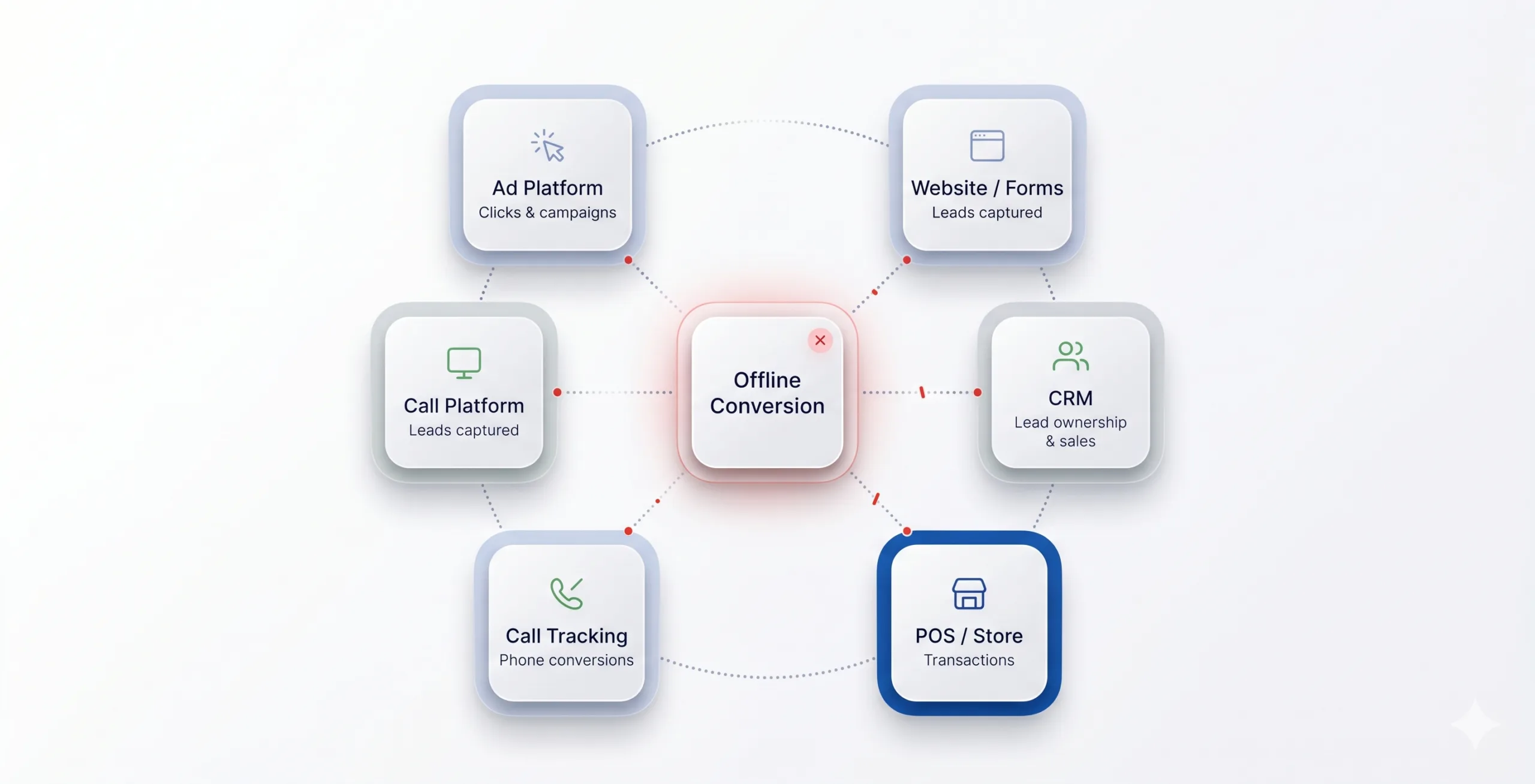
The core issue is structural, not technical. Location attribution breaks for four main reasons:
- Data lives in disconnected systems. Ad platforms, CRMs, POS systems, and call trackers each capture different parts of the customer journey.
- No shared identifier exists for “location.” Each system uses its own naming convention or ID for the same store.
- Offline conversions never reach marketing systems. Walk-ins, phone calls, and in-store purchases happen outside the digital ad ecosystem.
- Multi-location budgets are pooled centrally but outcomes happen locally, creating measurement gaps.
Most brands try to solve this by adding more tracking. The real fix is rebuilding how data flows between systems.
The temptation to treat attribution as a tracking problem is understandable. Tracking issues are visible, fixable, and feel solvable in an afternoon. The deeper structural issues, like missing location identifiers in the CRM or no integration between POS and ad platforms, take months to fix and require cross-functional buy-in. So most teams keep patching the visible symptoms while the underlying architecture stays broken.
Perceived vs Actual Attribution Problems

When brand teams describe their attribution issue, they almost always frame it as a tracking gap. Something is not firing. A pixel is broken. The lead form is missing a field. Someone forgot to add UTM parameters to the last campaign. If the tracking could just be tightened, they say, the leads would be properly attributed.
This framing is convenient because it makes the problem sound like something one engineer can fix in a sprint. It is also wrong in most cases. Tracking issues are real, but they are symptoms of a deeper problem.
The actual problem is architectural. The data needed to answer a location-level question lives in three or four systems that were never designed to talk to each other. The ad platform knows about clicks and form submissions but has no concept of which physical store a lead belongs to. The CRM knows about leads and which sales rep owns them but has limited visibility into ad source. The POS knows about completed transactions but has no idea which campaign or channel the customer came from. The call tracking platform, if one exists, knows about phone calls but not what happened before or after the call.
Each of these systems has its own definition of what a “lead” is, its own definition of what a “location” is, and its own user identifier. When a marketing team tries to answer a question like “how many leads did our Indiranagar store generate from paid social last month,” they are not running a report. They are running a reconciliation project across four systems with mismatched primary keys.
This is not a tooling failure. It is a design failure. No one decided to build it this way, which is precisely why it got built this way. Every team bought the tool that solved their immediate problem, and no one owned the seams between tools.
3 Root Causes of Broken Location Attribution
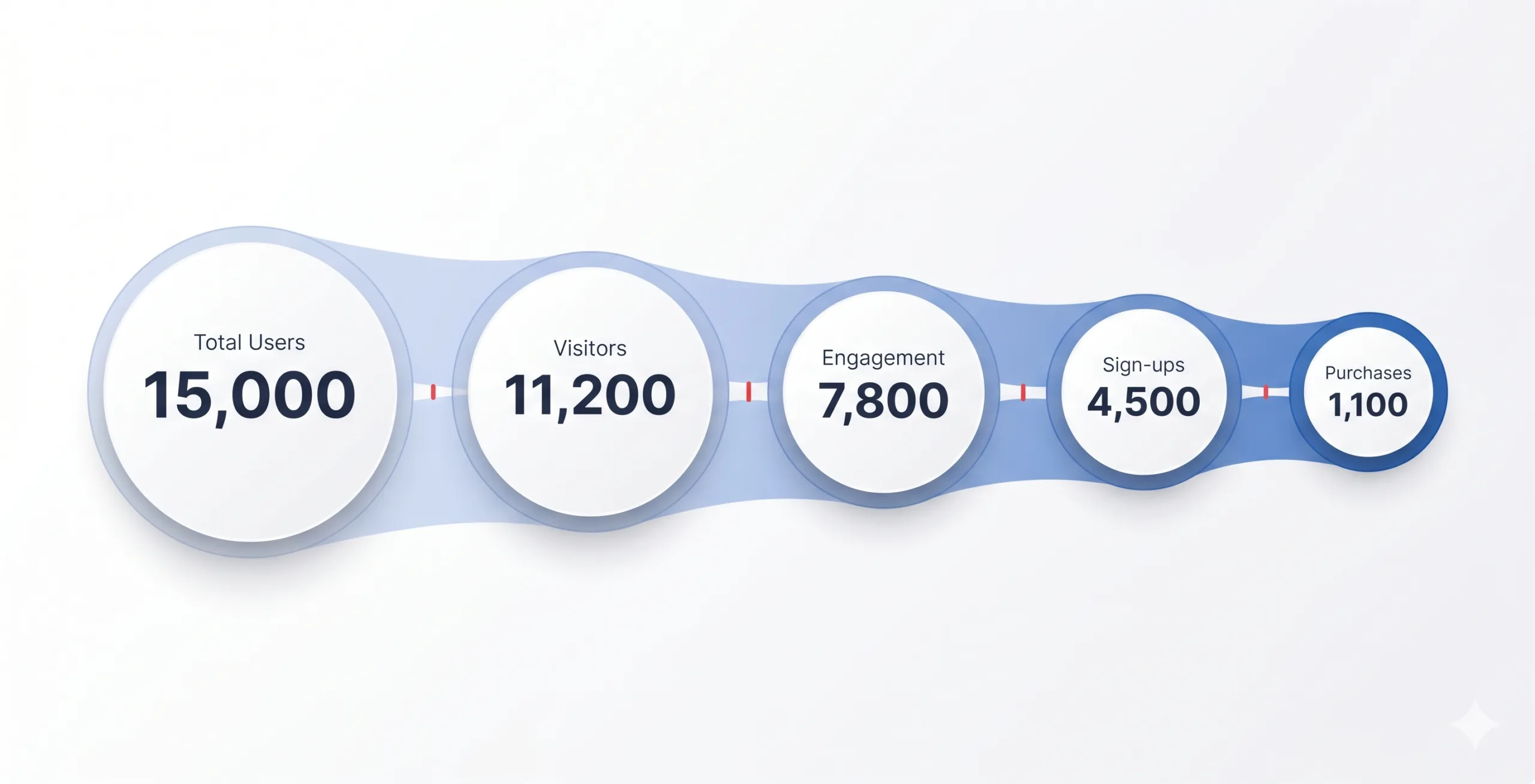
The architecture problem becomes easier to act on once it is broken into its three operational pieces. Every multi-location brand has some version of all three, usually in different proportions.
1. Data Fragmentation Across Marketing Tools
Each tool in a typical marketing stack owns a different part of the funnel:
- Ad platforms (Meta, Google, LinkedIn, TikTok): clicks, impressions, form fills
- Website analytics: sessions, pageviews, on-site behavior, scroll depth
- CRMs: lead records, sales rep ownership, deal stages, lead status
- POS and billing systems: transactions, revenue, repeat purchase behavior
- Call trackers: phone calls, call duration, recording, lead source attribution
- Email and SMS platforms: open rates, clicks, list membership
When data is joined across these systems using inconsistent keys, errors compound quickly. A single lead might be matched correctly in one system, partially matched in another, and missed entirely in a third. By the time the numbers reach a unified dashboard, they may be off by 20 to 40 percent.
The fragmentation problem is also why “more dashboards” rarely solves attribution. Dashboards reflect the quality of the underlying data. If the data has structural gaps, prettier dashboards just present those gaps in a more polished format.
2. Identity Resolution Gaps
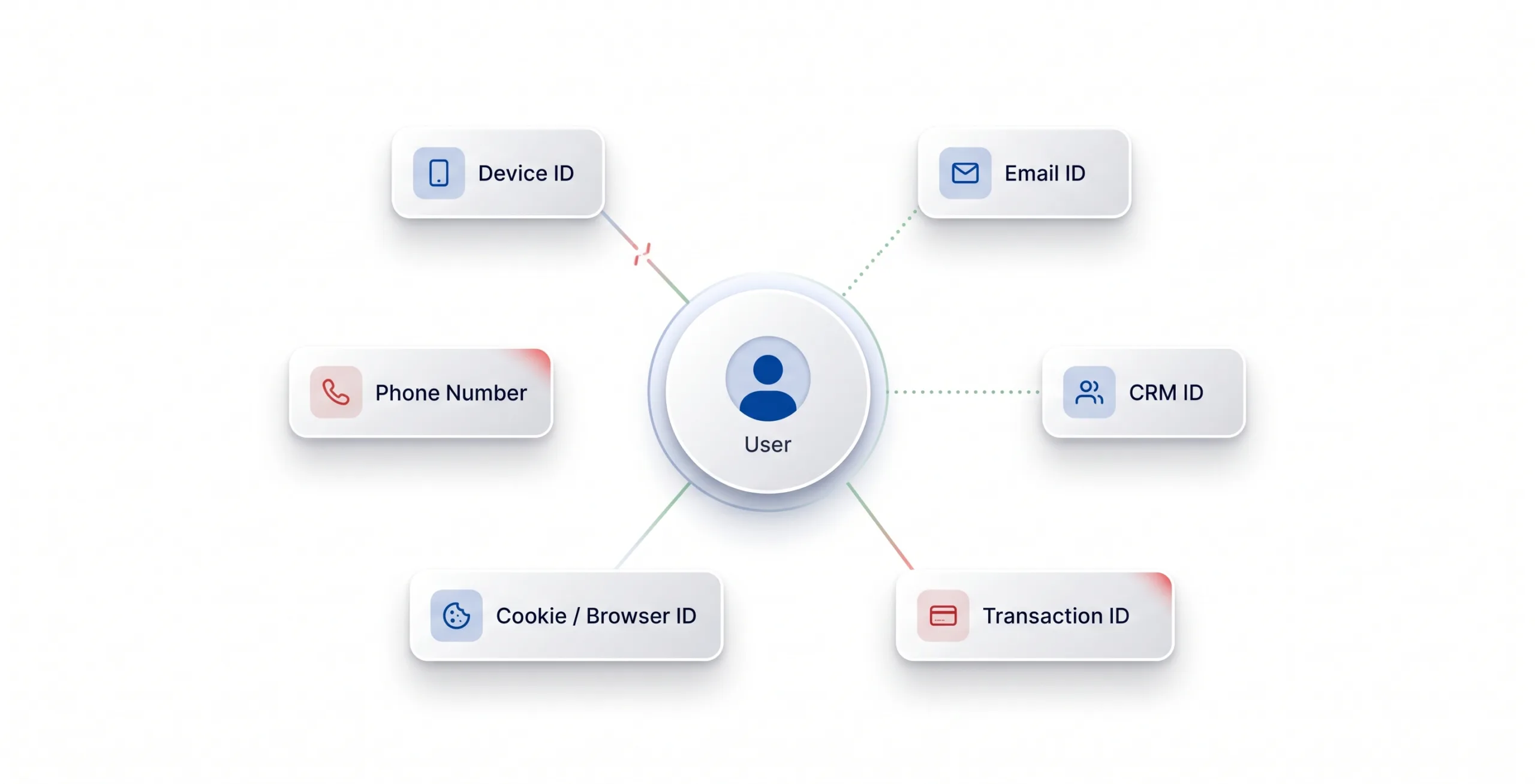
A single customer often appears as multiple users across systems. For example, a typical purchase journey might look like this:
- Clicks an Instagram ad on mobile (device ID, IP address)
- Visits the website on desktop the next day (cookie ID)
- Fills out a “request a callback” form (email and phone number)
- Receives a call from the local store (CRM record)
- Visits in person and pays with credit card (transaction ID)
Without an identity spine that ties these signals together, the same person becomes five separate records spread across five systems. Without unified identity, lead attribution to a specific location is mathematically impossible. The brand cannot determine that the Instagram ad drove a store visit, because the systems holding those two pieces of information do not know they are talking about the same person.
Identity resolution gets harder every year. Privacy regulations, cookie deprecation, and platform-level restrictions on cross-device tracking have made deterministic matching increasingly difficult. This makes building a first-party identity spine (using phone numbers, hashed emails, or internal customer IDs) more important, not less.
3. The Offline-to-Online Disconnect
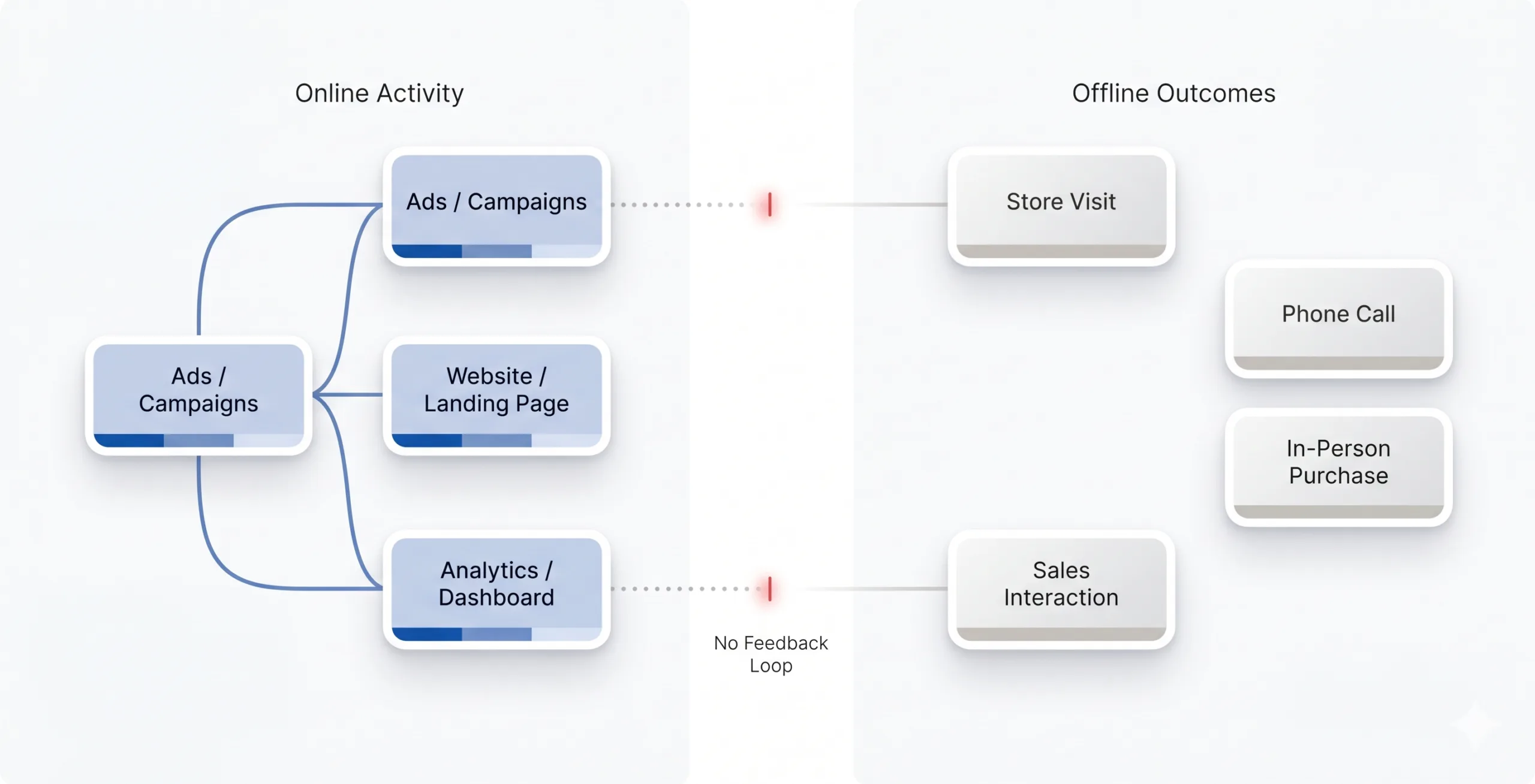
For multi-location brands, most revenue still happens offline. Common offline conversion types include:
- Store visits and walk-ins
- Inbound phone calls to the store
- Walk-in purchases at the counter
- In-person sales consultations
- Service appointments scheduled in person
- Card payments at the POS
Ad platforms cannot see any of these by default. Unless the brand has built bridges (call tracking, store-visit measurement, POS-to-CRM integration, conversion API uploads), offline outcomes never reach the system that decides where to spend marketing budget. This means budget allocation decisions are being made on a fraction of the actual data.
The disconnect also creates a perverse incentive. Channels that generate measurable online conversions (search clicks, form fills) get over-credited. Channels that generate offline outcomes (brand campaigns, local awareness, out-of-home advertising) get under-credited or eliminated entirely from the budget mix, even when they are driving real foot traffic.
Why Multi-Location Brands Struggle Most With Attribution
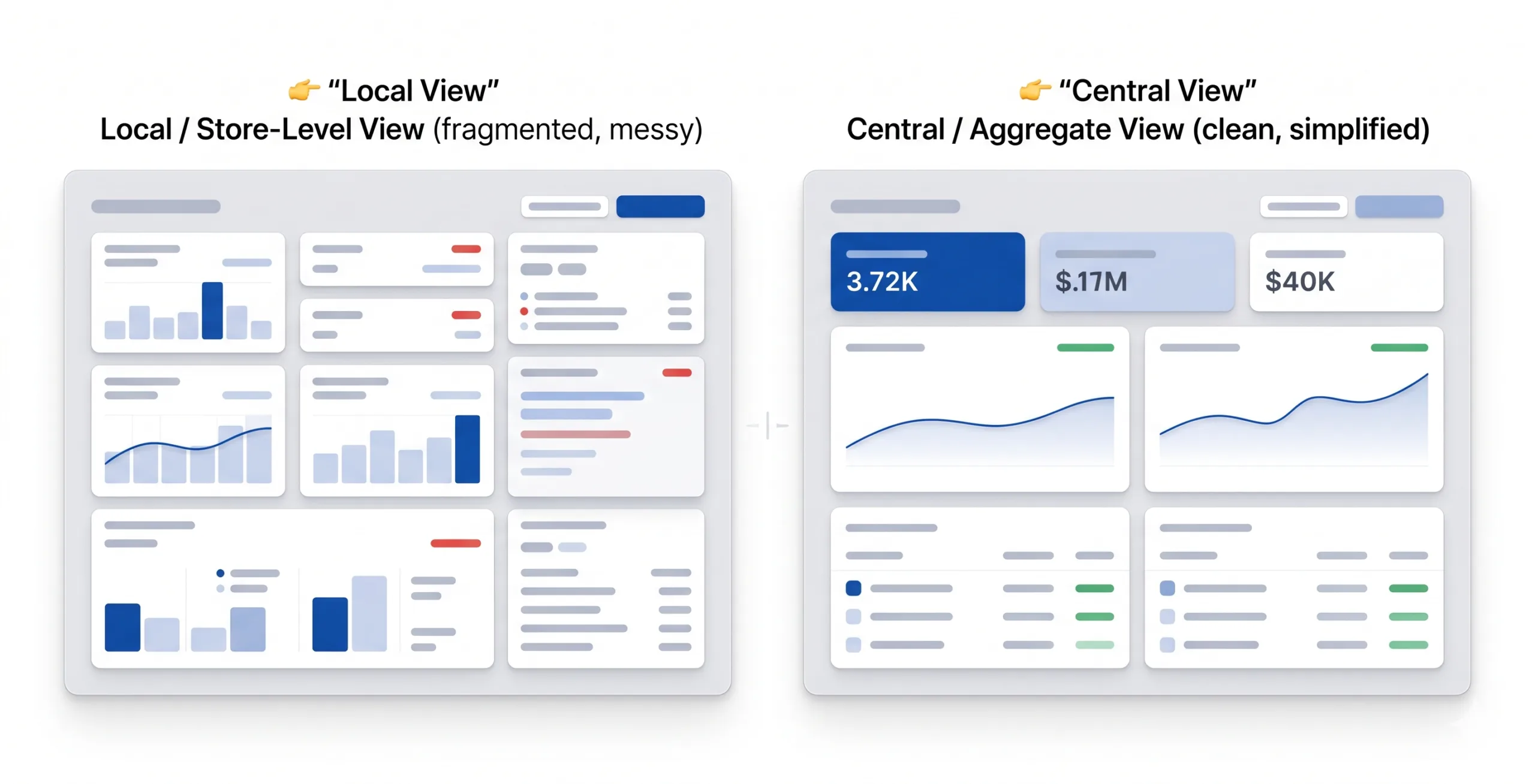
Central marketing teams operate with pooled budgets and national KPIs (overall ROAS, total leads, brand reach). Their job is to justify aggregate spend to leadership and demonstrate that the marketing function is delivering returns at scale. Their dashboards are built around channel performance, campaign performance, and quarter-over-quarter trends.
Local operators (store managers, franchisees, area managers) operate with location-specific P&Ls. They care about foot traffic in their specific store, lead volume in their specific city, and sales conversion in their specific catchment area. Their reality is granular and operational. They know whether the parking lot was full last weekend and whether the phone rang.
When the attribution system cannot answer questions at the store level, two things happen:
- Central teams default to platform-reported ROAS as their primary metric, since it is the only metric available at scale.
- Local operators rely on gut feeling, customer conversations, and basic foot traffic counts to evaluate whether marketing is working for them.
Neither group has the data to settle disagreements with the other group. The argument becomes political instead of analytical. Local operators stop trusting central marketing teams. Central teams accuse local operators of being anecdotal. Co-op marketing budgets get cut, expanded, or restructured based on whoever has more political capital that quarter, not based on what the data shows.
This trust gap is the hidden cost of broken location attribution. It is not a reporting inconvenience. It is the reason franchise relationships strain, marketing co-ops collapse, and central teams lose credibility with the operators they are supposed to support.
Common Mistakes Brands Make With Attribution
Three patterns appear across nearly every multi-location brand that has tried (and failed) to fix attribution.
Mistake 1: Chasing Perfect Attribution
Many teams want to assign every dollar of spend to a specific outcome and treat anything less than full coverage as a failure. This is an expensive fantasy. Perfect user-level attribution is not achievable with current technology, and even if it were, the cost of building it would exceed the value of the insights gained.
What works better is directional accuracy at the location level. Knowing that paid social drives roughly twice as many leads in urban stores as in suburban ones is more actionable than knowing the exact attribution path of every individual lead. Most strategic decisions can be made with directionally correct data, and the brands that accept this move much faster than the ones still chasing precision.
Mistake 2: Over-Trusting Platform-Reported Data
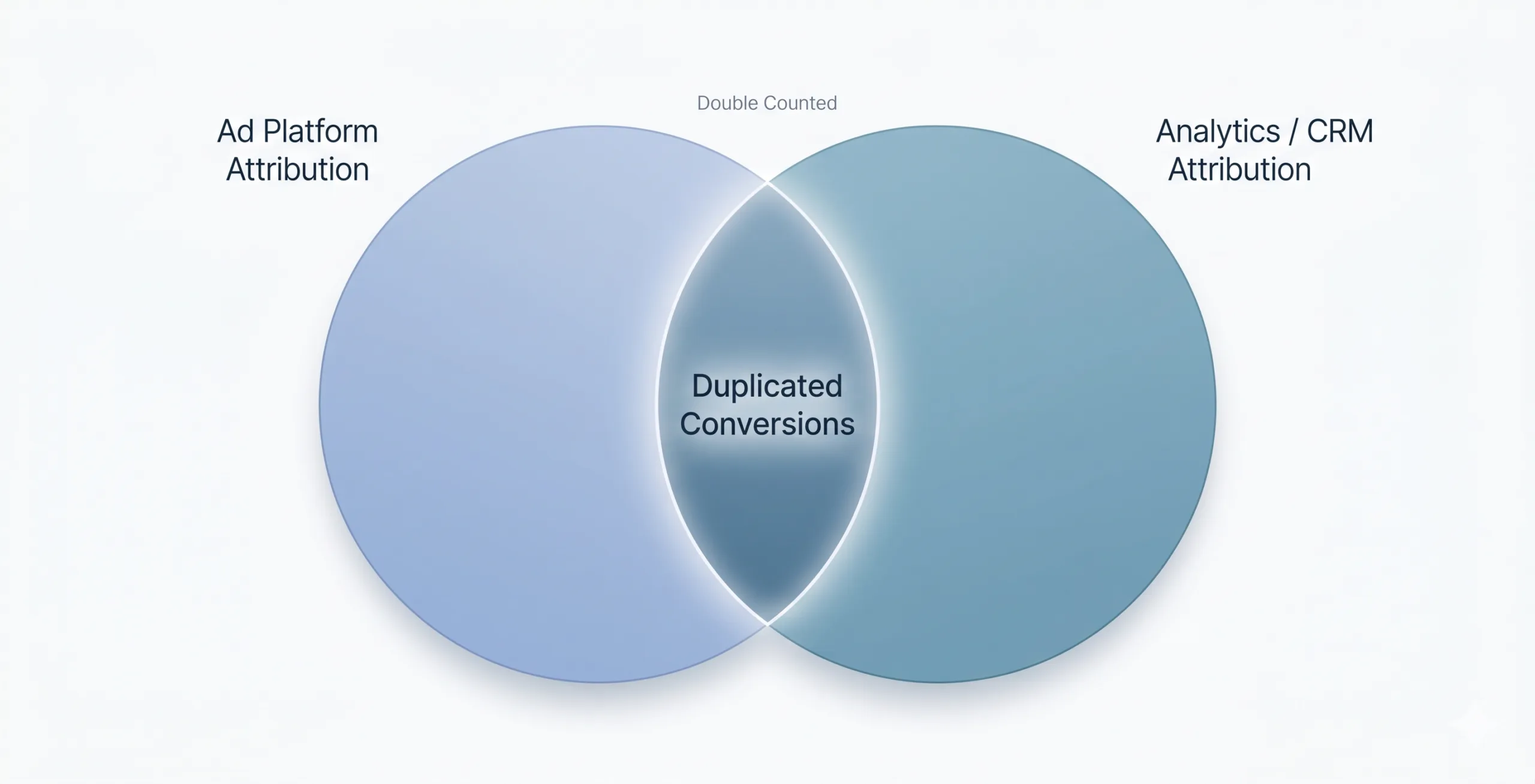
Ad platforms (Meta, Google, TikTok, LinkedIn) are structurally incentivized to claim credit for conversions they touched, even minimally. Each platform uses its own attribution window, its own view-through rules, and its own modeled conversions. When totals are summed across platforms, the numbers almost always exceed the actual lead count in the CRM by 30 to 60 percent.
This means treating platform-reported ROAS as ground truth is one of the most expensive mistakes a marketing team can make. It leads to budget being directed toward whichever platform is most aggressive about claiming credit, not toward whichever platform is actually driving the most incremental value.
Mistake 3: Buying More Tools to Fix the Problem
When attribution feels broken, the instinct is to buy a new tool. A new attribution platform. Another CDP pilot. A consultant to audit the existing stack. These can help, but only if the underlying identifiers and data flows are sane. Adding a sixth system to a broken five-system stack inherits all of the existing fragmentation and creates new gaps. The new tool cannot resolve identities the source systems never captured. It cannot tie leads to locations if location IDs are missing from the CRM.
The fix is almost always upstream of the tooling layer. Cleaner inputs, consistent identifiers, and disciplined data hygiene unlock far more value than any tool can.
How to Fix Location-Based Lead Attribution: 4 Practical Steps
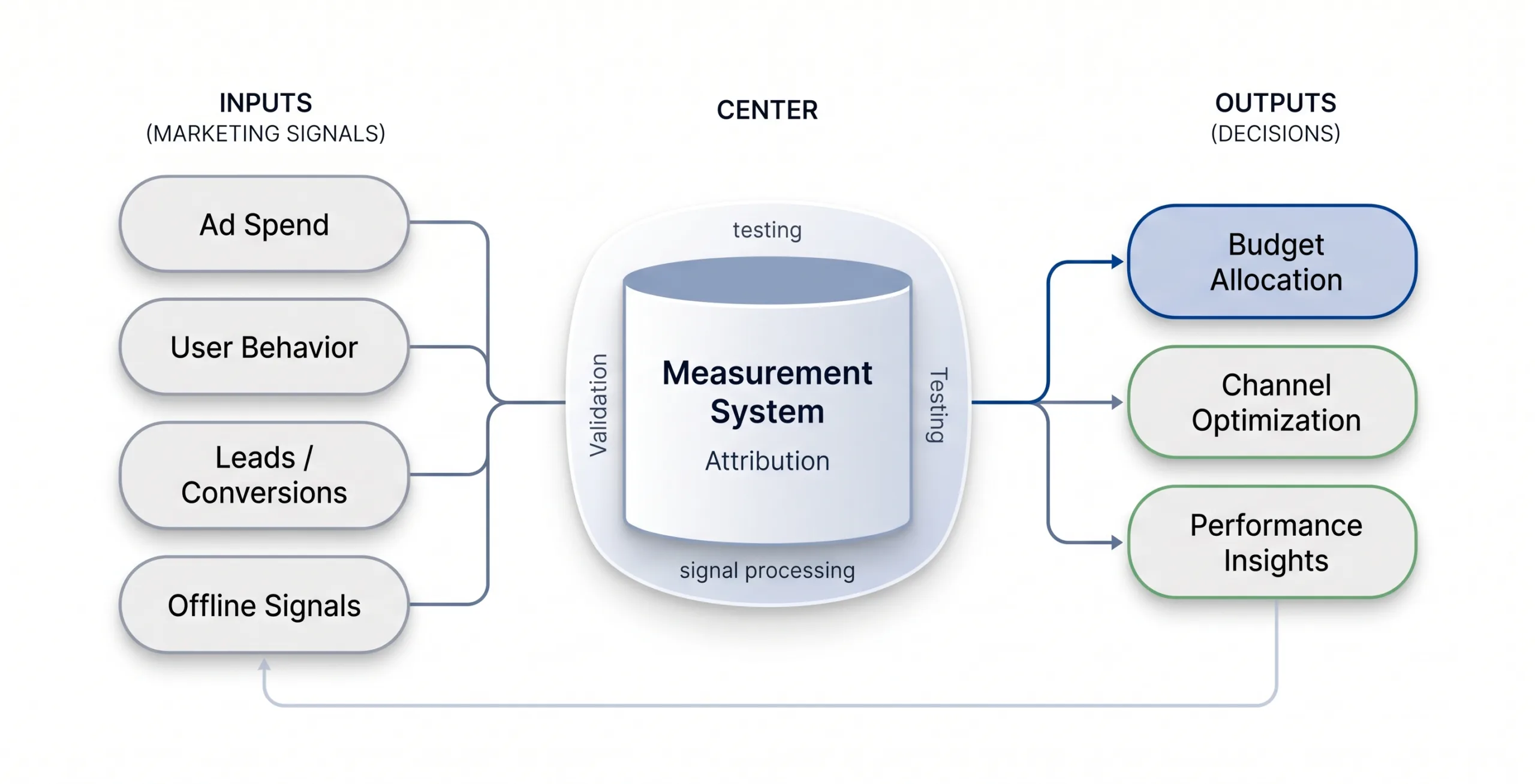
The following sequence works for most multi-location brands and can typically be implemented within one to two quarters. The steps are listed in order of dependency, not in order of glamour. The unsexy steps come first because everything else depends on them.
Step 1: Standardize Location Identifiers
A stable, unique location ID is the foundation of everything else. Without it, no downstream attribution work can be reliable.
- Assign every store a stable, unique location ID at the brand level.
- Encode this ID in every campaign, UTM parameter, landing page URL, and form submission.
- Ensure the same location ID appears in the CRM, POS, call tracking, and email systems.
- Avoid using store names as identifiers since they can be renamed, misspelled, or translated.
- Document the location ID schema in a single internal reference that all teams can access.
- Build validation checks that flag any new campaign or form lacking a location ID.
This is unglamorous operations work that a mid-level marketing operations or analytics person can lead. It usually takes four to eight weeks for a brand with 20 to 100 locations and unlocks almost everything else downstream.
Step 2: Build a Unified Data Layer
Once location IDs are standardized, the next step is to consolidate data from all source systems into a single place where it can be joined consistently.
- Centralize lead data, transactions, calls, and ad events in one place.
- For smaller brands, a structured data warehouse (BigQuery, Snowflake, Redshift) is often sufficient.
- For larger or franchise-heavy brands, a customer data platform (CDP) is usually required.
- Ensure all data is keyed by the standardized location ID and a consistent customer identifier.
- Set up automated data quality checks to catch broken integrations early.
- Document the data model so analysts and stakeholders understand the schema.
The technology matters less than the commitment to a single source of truth. A well-structured warehouse with disciplined data hygiene will outperform a poorly implemented enterprise CDP every time.
Step 3: Capture Offline Signals Deliberately
Online data alone is not enough for multi-location brands. Offline signals must be captured, structured, and piped into the unified data layer.
- Implement location-specific call tracking numbers for each store.
- Pipe POS transaction data into the warehouse on a daily basis.
- Use store-visit measurement tools where geographically relevant (Google, Meta, or third-party providers).
- Connect CRM lead status updates back to the original ad source through closed-loop reporting.
- Upload offline conversions to ad platforms via Conversion APIs to improve algorithmic optimization.
- Build feedback loops that let central teams see when leads convert offline weeks after the original ad click.
This step is often where the most value is unlocked, especially for brands where in-store revenue dwarfs online revenue.
Step 4: Run Geo-Level Experiments Instead of User-Level Attribution
The final step is a mindset shift more than a technical one. Stop trying to track every individual user and start measuring spend impact at the geographic level.
- Hold out a region from a campaign and compare it against active regions.
- Use matched-market testing to estimate true incremental lift.
- Run sustained experiments (four to six weeks) to overcome short-term noise.
- Treat geo-level results as the source of truth for budget decisions.
- Use platform-reported numbers for tactical optimization but not strategic allocation.
- Build an internal experimentation calendar so tests run continuously rather than ad-hoc.
Geo-level testing is how serious performance marketing teams have worked for years. It is more robust, more privacy-resilient, and more aligned with how multi-location budgets are actually allocated.
Platform Attribution vs Operational Attribution
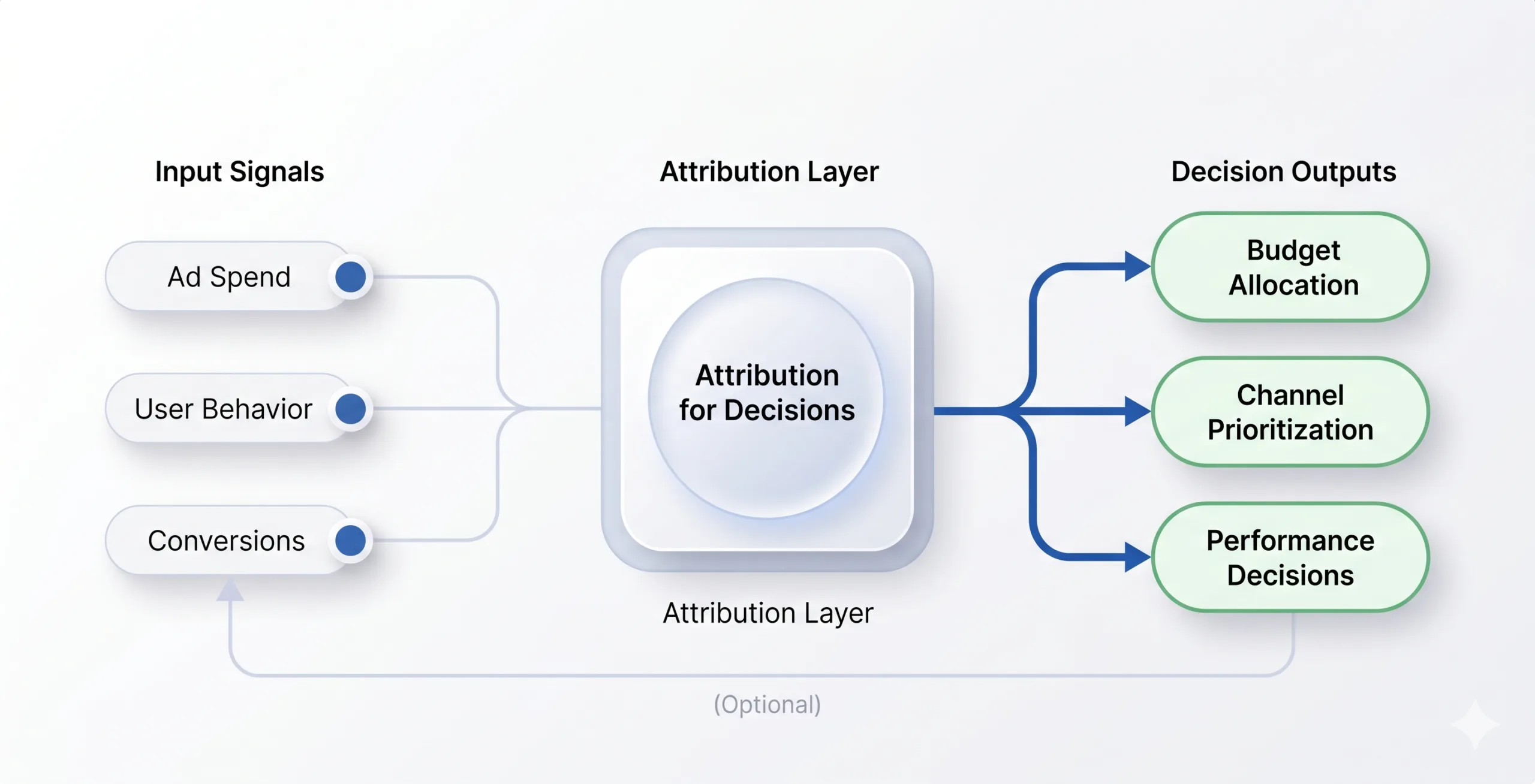
The most useful distinction in attribution work separates two ways of thinking about what attribution is for.
Platform attribution is what most brands have today. It is the set of dashboards, reports, and ROAS numbers generated by ad platforms and analytics tools. It is backward-looking. It explains what happened last week or last month. It is optimized for reporting, not action. It demands a level of precision that the underlying data cannot actually deliver, which leads teams to either over-trust the numbers or distrust them entirely.
Operational attribution is what works. It is decision-oriented rather than report-oriented. It tolerates ambiguity in exchange for speed and directionality. It assumes the data is rough and acts on it anyway, because the alternative is not acting at all. It validates ad platform claims with experiments rather than treating them as truth. It informs next week’s spend decisions instead of explaining last month’s results.
Brands that make this shift stop asking for perfect attribution. They start asking whether the data is good enough to make the next call with confidence. The answer is usually yes, much earlier than they thought. Once decisions start getting better, the reporting gets easier, because the questions being asked of the data are finally the right ones.
This shift is also what unlocks faster growth. Brands stuck in platform attribution mode wait for clean data before making decisions, which means they make fewer decisions and miss opportunities. Brands operating in operational attribution mode make more decisions, learn from them faster, and compound that learning into better budget allocation over time.
Key Takeaway
Solving location-based lead attribution is not a reporting upgrade. It is an operating system change for how a multi-location brand allocates marketing budget, evaluates performance, and aligns central and local teams. The tactical fixes (location IDs, unified data layers, offline signal capture, geo-experiments) are well-understood. What separates the brands that solve this from the brands that do not is the willingness to treat attribution as an architectural problem rather than a tracking problem.
Brands that get this right do not just get better dashboards. They get the ability to scale spend with confidence in places they used to spend with hope. They earn back the trust of local operators. They allocate co-op budgets based on data instead of politics. And they compound those advantages over time into a measurement system that keeps getting sharper while their competitors keep arguing about whose dashboard is right.
The biggest reason is data fragmentation. Ad platforms, CRMs, POS systems, and call trackers each store different parts of the customer journey using different identifiers, making it impossible to join the data accurately at the location level without a unified data layer.
Regular marketing attribution focuses on which channel or campaign drove a conversion. Location attribution adds a second dimension by tying that conversion to a specific physical store, branch, or franchise, which is essential for multi-location brands managing pooled budgets and local P&Ls.
Not necessarily. Smaller brands can solve attribution with a well-structured data warehouse and consistent location IDs. CDPs become valuable for larger brands with hundreds of locations, complex identity resolution needs, or activation requirements across multiple platforms.
Ad platforms are designed to claim credit for conversions they touched, even minimally. They use last-click, view-through, or modeled conversions that often overlap, leading to inflated and double-counted results when totals are summed across multiple platforms.
Start by standardizing location IDs across every campaign, form, CRM record, and POS entry. This single foundational step unlocks most downstream improvements and can usually be completed by a mid-level operations team within four to eight weeks.
Geo-level experiments are more reliable for multi-location brands. Holding out a region and measuring lift against active regions provides cleaner causal data than user-level tracking, which is increasingly limited by privacy regulations and platform restrictions.