Research Labs
Which referral program structures actually work in the beauty and wellness category?
Discount fatigue, medicalized protocols, and the rise of trust networks have rewritten referral economics. A look at the structures actually compounding in 2026.
The beauty and wellness category has changed faster than its growth playbook. A decade of DTC orthodoxy taught founders to optimize the funnel, run the discount loop, and refine the give-ten-get-ten mechanic until the unit economics worked. That playbook was built for a world of serums and supplements. It is being applied, badly, to a new generation of businesses selling hormone therapy, IV drips, body sculpting, and longevity protocols. The mechanics no longer fit the category.
The slow death of give-ten-get-ten
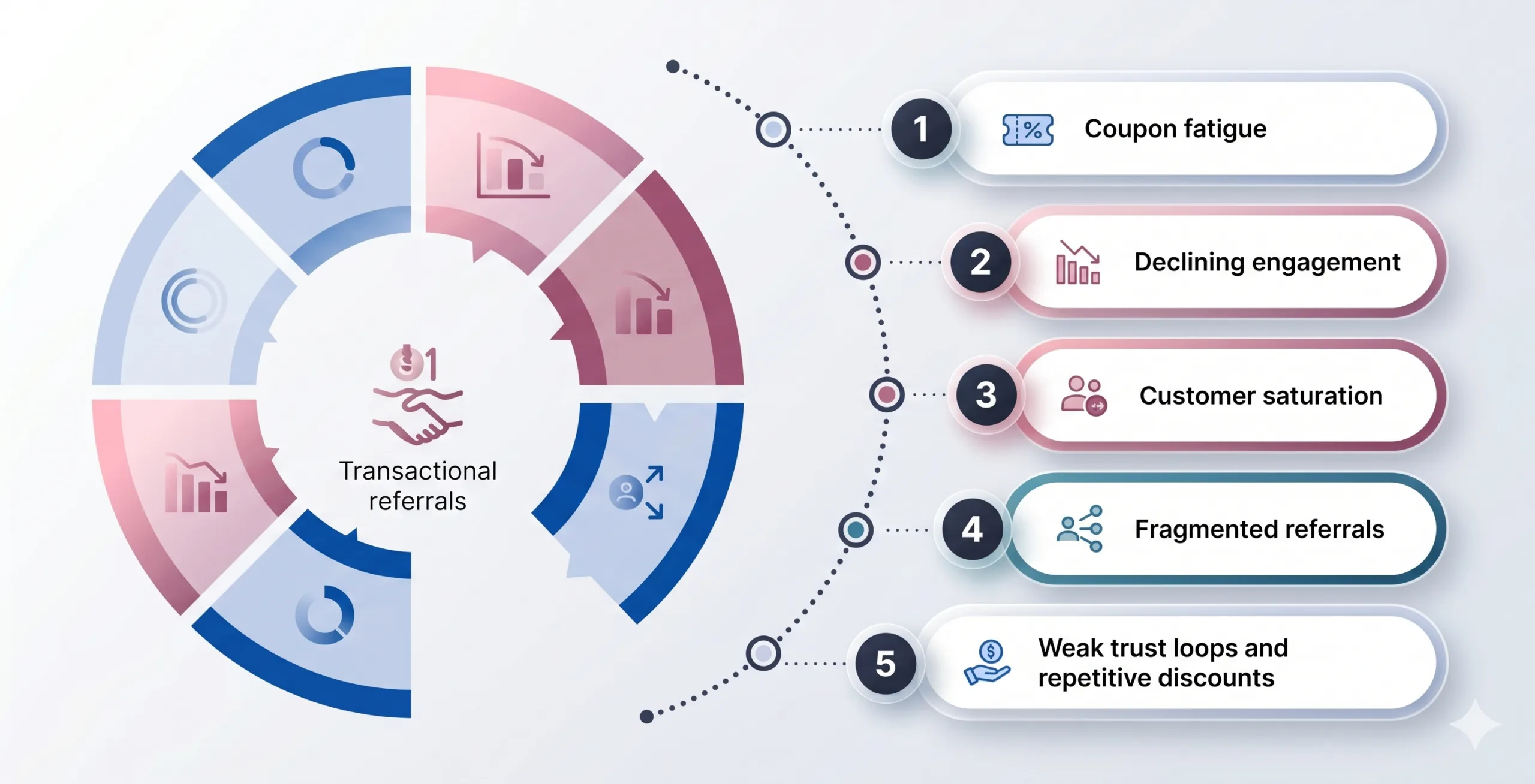
For the last decade, referral programs in beauty and wellness ran on roughly the same blueprint. Offer the existing customer a discount. Offer the new customer a discount. Watch the spreadsheet tick upward.
It worked for a while because everything was new. The DTC skincare brand, the haircare subscription, the protein powder, the gummy vitamin. Customers had not yet been desensitized to the mechanic. A ten dollar credit felt like found money.
That era is functionally over.
The average wellness consumer in 2026 is sitting on dozens of dormant credits across brands they tried once. Discount fatigue is real, and it is structural. When everyone runs the same offer, the offer stops meaning anything. The brand is no longer rewarding loyalty. It is subsidizing customers who would have bought anyway, while training the rest to wait for a code.
Worse, give-ten-get-ten implicitly tells the referrer that their relationship with the brand is transactional. The customer is being paid to advocate. That used to feel clever. Now it feels cheap, especially in categories where the consumer perceives the product as part of their identity.
Wellness is no longer beauty
The other thing that broke the old model is that the category itself stopped looking like a category.
Five years ago, beauty and wellness brands mostly sold things that went on a face or into a smoothie. The economics were predictable. Repeat purchase cycles ran on serums, supplements, and bars.
The new wave is different. It includes hormone optimization for men and women, peptide therapy, GLP-1 weight loss programs, IV drip lounges, recovery clubs with contrast pools and infrared saunas, longevity clinics that run bloodwork quarterly, body sculpting franchises, and fertility-aware hormone replacement.
These are not products. They are protocols. They are medicalized, recurring, and embedded in the customer’s body in a literal way. The lifetime value of someone on an annual hormone program is not comparable to someone buying a face cream every quarter. The trust required to start is also not comparable.
Nobody refers a friend to testosterone optimization the way they refer them to a moisturizer. The conversation is different. The risk feels different. The intimacy is different.
That difference is what is forcing referral economics to evolve.
What people are actually referring
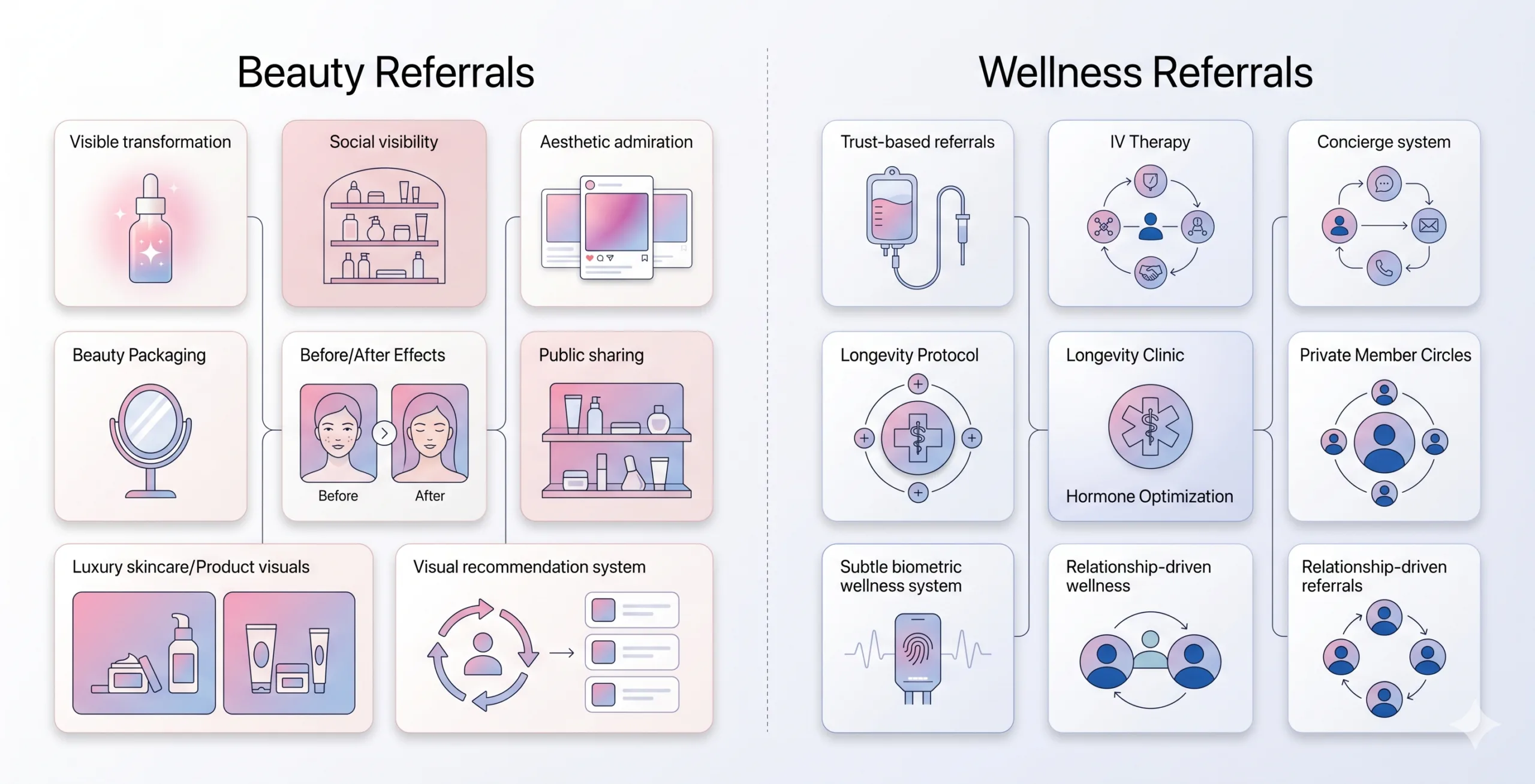
It helps to separate the psychology of beauty referrals from wellness referrals, because they pull on different ropes.
Beauty referrals are driven by visible results. The friend whose skin transformed. The colleague whose body changed. The woman in the elevator whose lips look subtly different in a way nobody can quite place. Beauty is broadcast. The referral happens because someone noticed.
Wellness referrals are driven by trust. There is no way to see when a friend’s testosterone levels normalized or when her cortisol dropped. It comes up in a quiet conversation, often initiated by them, often framed as confession. “I have been doing this thing.” The referral happens because someone decided to disclose.
These two motions need different machinery. A beauty brand that ignores the visual loop is leaving growth on the table. A wellness brand that tries to engineer virality the same way is going to look tacky and lose trust.
The sharpest operators in the space treat their referral strategy as a function of how their product gets seen, or not seen, in the wild.
What is actually working
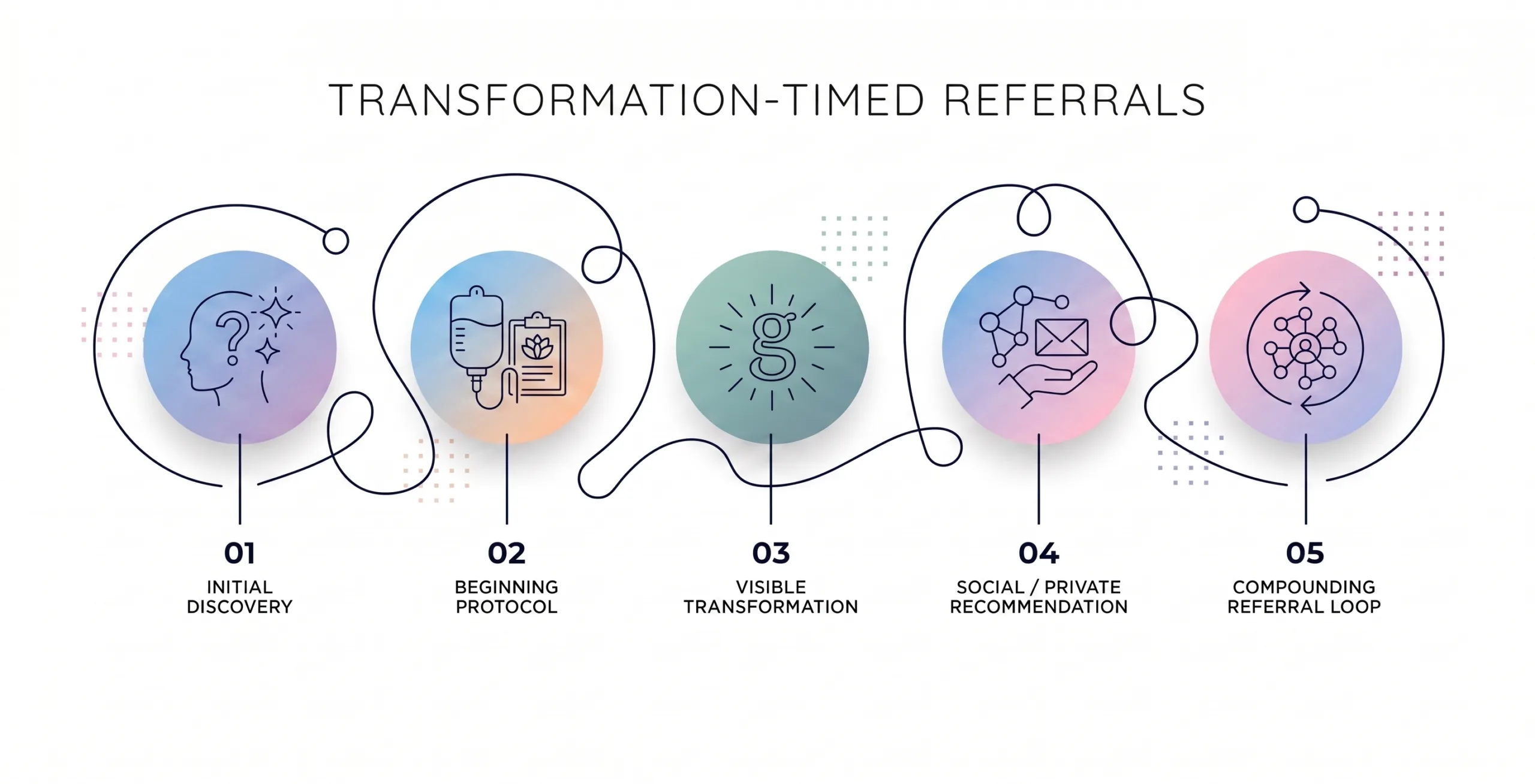
Here are the structures outperforming standard discounts, and the logic behind each.
Membership-based referral systems. Several recovery clubs and longevity clinics have moved to memberships that include a quarterly guest pass. The member is not earning a discount. They are earning the right to introduce a friend to an experience that is otherwise hard to access. This reframes the entire transaction. The member feels generous, not transactional. The friend arrives feeling chosen. The brand gets a qualified, warm prospect inside the four walls.
VIP and status-driven referrals. A handful of aesthetic clinics have started tiering customers based on referral activity rather than spend. The reward is not a credit. It is access. Early booking windows for new treatments. Invitations to small dinners. A specific provider’s calendar held open. The status itself becomes the incentive, and the social signaling that comes with it is harder to commoditize than a coupon.
Ambassador and community-led referrals. Adapted from the creator economy. A small group of customers, often eight to forty people, gets early access, custom protocols, and a private group chat with the founder or medical director. They are not paid to post. They post because they are inside something. The referral flow is organic, and the conversion rate is meaningfully higher than influencer campaigns because the recommendation is embedded in actual friendship networks.
Transformation-timed referrals. This may be the most underrated structure in the entire category. The referral prompt does not arrive at checkout. It arrives at the moment of visible result. Eight weeks into a GLP-1 program. Four sessions into a body sculpting series. The morning after a particularly good IV drip. The customer is at peak enthusiasm, and the ask is timed to that peak rather than to a billing cycle. Simple mechanics. Sharp behavioral insight.
Content-led referrals. Some brands have stopped giving customers codes entirely and started giving them content. Pre-shot aesthetic photography of the clinic, the protocol, the result. A frictionless way to post. The referral is the post, and the brand never asks for one. They make posting too easy not to do.
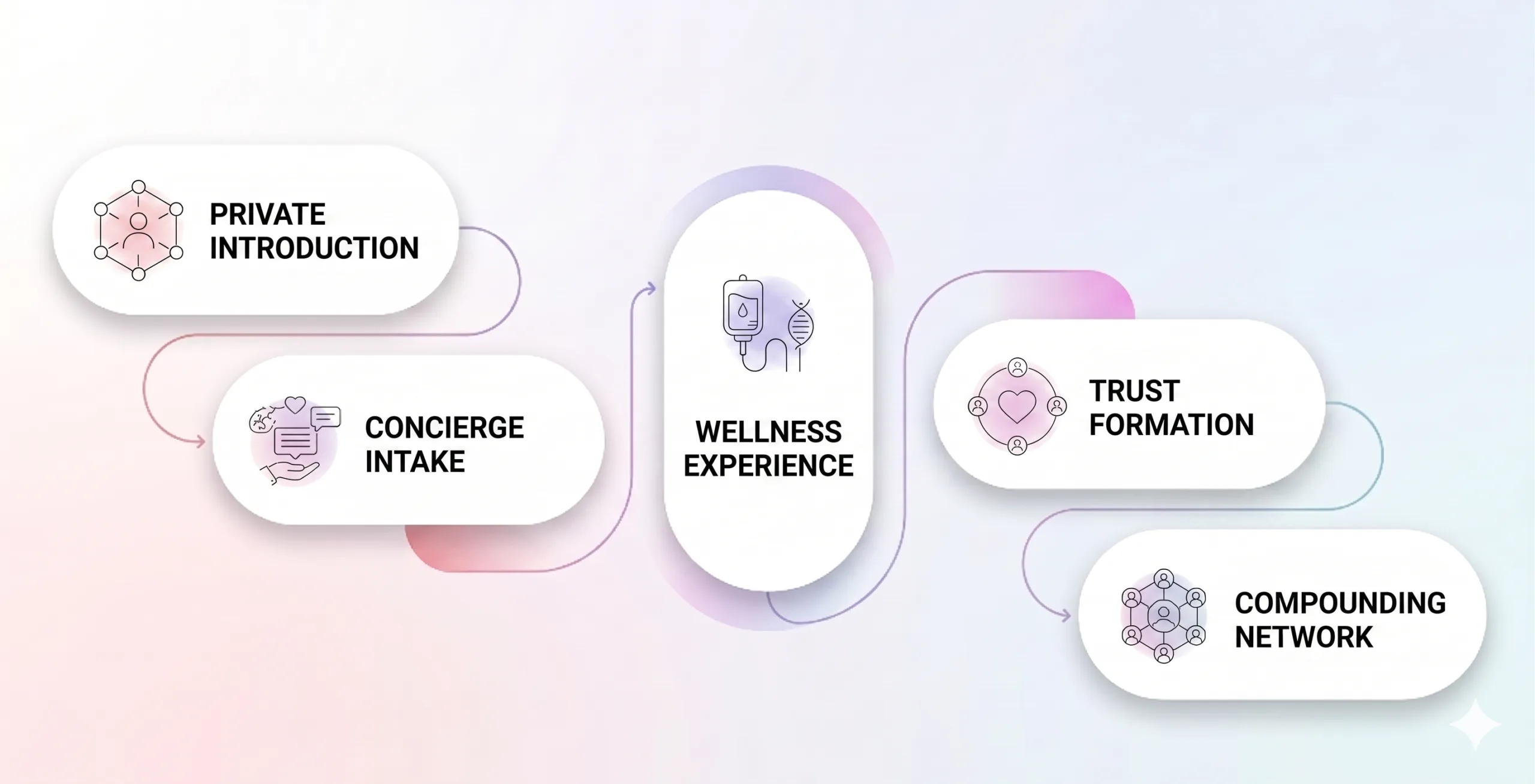
Concierge and insider-style referrals. The model from the West Hollywood lobby. No app. A phone number. A member calls, names a friend, and a concierge handles intake. No code is generated. No discount is offered. The friend gets a faster door, a warmer welcome, and the implication that they are now part of something curated. The cost is the concierge’s time. The return is a customer who walks in believing they have already been vetted.
The aesthetic is the referral
It is impossible to talk about modern wellness referrals without talking about how the space looks.
The new clinics are designed for the phone camera. The IV drip lounges have curved walls and warm light. The recovery clubs have leather banquettes and ceramic mugs. The cryo chambers are photographed against neutral palettes that read as expensive on Instagram.
This is not vanity. It is strategy. Every customer who posts a story from inside the space is a referral the brand did not pay for.
The corollary is that brands without an aesthetic point of view are invisible on social. Two clinics offering the same protocol at the same price will have radically different organic growth based on whether the customer wants to be seen in the room.
Creator-led referrals work for the same reason. The creator is not endorsing a product. The creator is performing a lifestyle, and the brand is the set dressing.
The privacy paradox
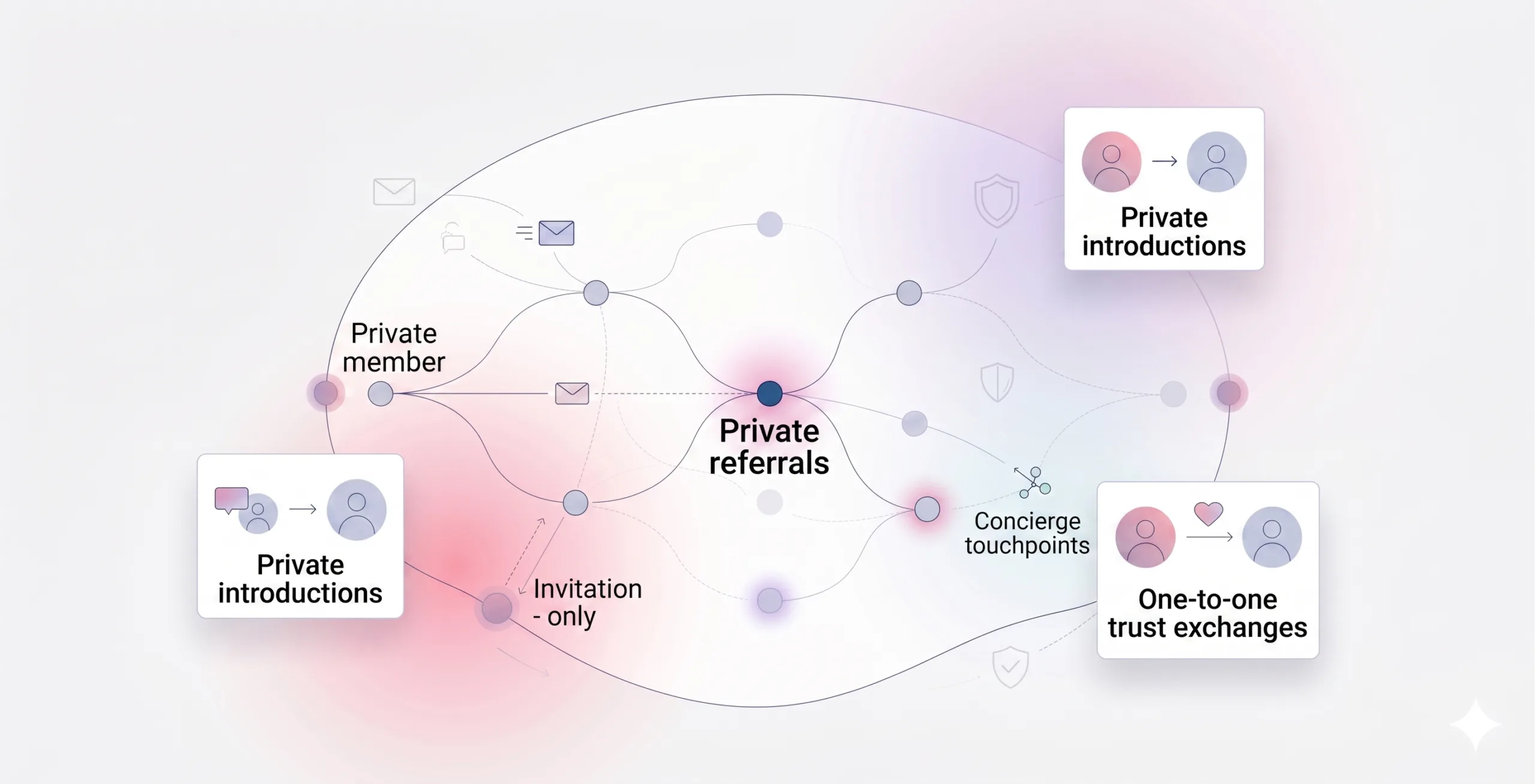
Here is the hard part. Some of the fastest growing categories in wellness are the ones people least want to talk about.
GLP-1 use is the obvious one. A meaningful slice of the most enthusiastic customers will not publicly disclose. Hormone replacement is similar. So is anything tied to fertility, weight, or anti-aging, which is to say, most of the highest-LTV protocols on the market.
This creates a tension the old referral playbook never had to solve. The customer is thrilled with the result. The customer will refer privately to two or three close friends. The customer will not post.
The brands navigating this well are designing referral systems that route through trusted, low-visibility channels. Direct text invitations from the brand to a friend named by the customer. Closed concierge introductions. Private founder dinners where attendees can opt into being introduced to the medical team without it being visible to anyone outside the room.
The brands navigating this badly are still trying to incentivize public posting, and watching their best customers go quiet.
The best referral programs do not feel like referral programs
This is the part that matters most.
The structures that work in modern beauty and wellness almost never feel like programs. They feel like recommendations. They feel like a friend talking about her doctor. They feel like access. They feel like being let into something.
The infrastructure is still there, of course. Someone is tracking the introduction. Someone is attributing the new customer to the existing one. Someone is making sure the member’s quarterly guest pass renews.
But the customer does not see the infrastructure. They see a phone number. They see a name. They see a concierge who already knows why they are calling. The mechanism is invisible, and that invisibility is the entire point.
What comes next
The future of growth in beauty and wellness will not look like the funnel optimization era that just ended.
It will look like trust networks. Closed communities. Member-led introductions. Concierge intake teams that function as growth surfaces. Aesthetic environments that generate organic content without ever asking. Private referral channels for the categories that cannot be posted about. Public referral loops for the ones that demand to be seen.
The brands that figure this out will compound. Recurring wellness, by its nature, rewards retention more than acquisition, and referrals from inside that retained base are the cheapest, highest-trust customers in the funnel.
The brands that keep running give-ten-get-ten will keep getting the customers nobody else wanted.
Back to that lobby in West Hollywood. No code. No link. Just a name dropped to a concierge three days earlier. That is what growth looks like now, in the parts of the market that actually compound.
The companies building for it will look, ten years from now, less like consumer brands and more like trusted institutions. Which is probably what the category should have been all along.
The mechanic worked when DTC was new and a ten dollar credit felt like found money, but the average wellness consumer in 2026 is sitting on dozens of dormant credits across brands they tried once. When every brand runs the same offer, the offer stops meaning anything, and what looks like a loyalty reward is actually subsidizing customers who would have bought anyway while training the rest to wait for a code. There's also a positioning cost: paying customers to advocate signals that the relationship is transactional, which feels cheap in a category where the product is increasingly tied to the customer's identity and body.
They pull on different ropes. Beauty referrals are driven by visible results, so the referral happens because someone noticed (the friend whose skin changed, the colleague whose body shifted). Wellness referrals are driven by trust and disclosure: nobody can see when a friend's testosterone normalized or her cortisol dropped, so the referral happens in a quiet conversation, often framed as confession. A beauty brand that ignores the visual loop is leaving growth on the table, but a wellness brand that tries to engineer virality the same way will look tacky and lose trust.
Six recurring patterns show up across the best operators. Membership-based systems with quarterly guest passes reframe referrals as access rather than transaction. VIP and status-driven programs tier customers by referral activity and reward them with early booking, dinners, and provider access instead of credit. Ambassador or community-led groups of 8 to 40 customers get early access and a private channel with the founder or medical director, and refer organically. Transformation-timed referrals trigger the ask at the moment of visible result (8 weeks into a GLP-1 program, 4 sessions into body sculpting) rather than at checkout. Content-led referrals give customers pre-shot photography instead of codes. And concierge-style referrals route through a phone number and a named introduction, with no code generated at all.
This is the privacy paradox of the modern category: some of the highest-LTV protocols (GLP-1, hormone replacement, fertility, anti-aging) have the most enthusiastic customers who will refer privately to two or three close friends but will not post. Brands navigating this well are designing referral systems that route through low-visibility channels: direct text invitations from the brand to a friend the customer names, closed concierge introductions, and private founder dinners where attendees can opt into being introduced without that visibility leaking outside the room. Brands navigating it badly are still incentivizing public posting and watching their best customers go quiet.
Every customer who posts a story from inside the space is a referral the brand did not pay for, which means the interior design budget is functionally a marketing line item. The new clinics, IV lounges, and recovery clubs are designed for the phone camera (curved walls, warm light, ceramic mugs, neutral palettes that read as expensive on Instagram) because two clinics offering the same protocol at the same price will have radically different organic growth based on whether customers want to be seen in the room. The same logic explains why creator-led referrals work: the creator isn't endorsing a product, they're performing a lifestyle, and the brand is the set dressing.